

Itinerary
Day 1: Cusco – Checacupe – Pitumarca-Quechuyno-Vinicunca-Cusco
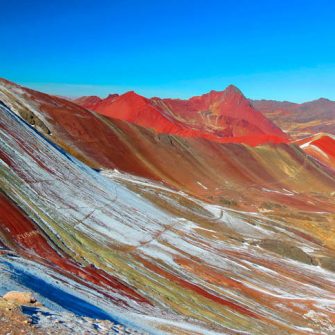
The Rainbow Mountain, known as the 7-color mountain, Red Mountain, Vinicunca Mountain, is a magical place where its paths were part of the ancient Quechua culture, and used to Exchanging their products (barter products), along with the other Quechua regions, has now become a natural marvel similar to China’s Rainbow Mountain.
Program
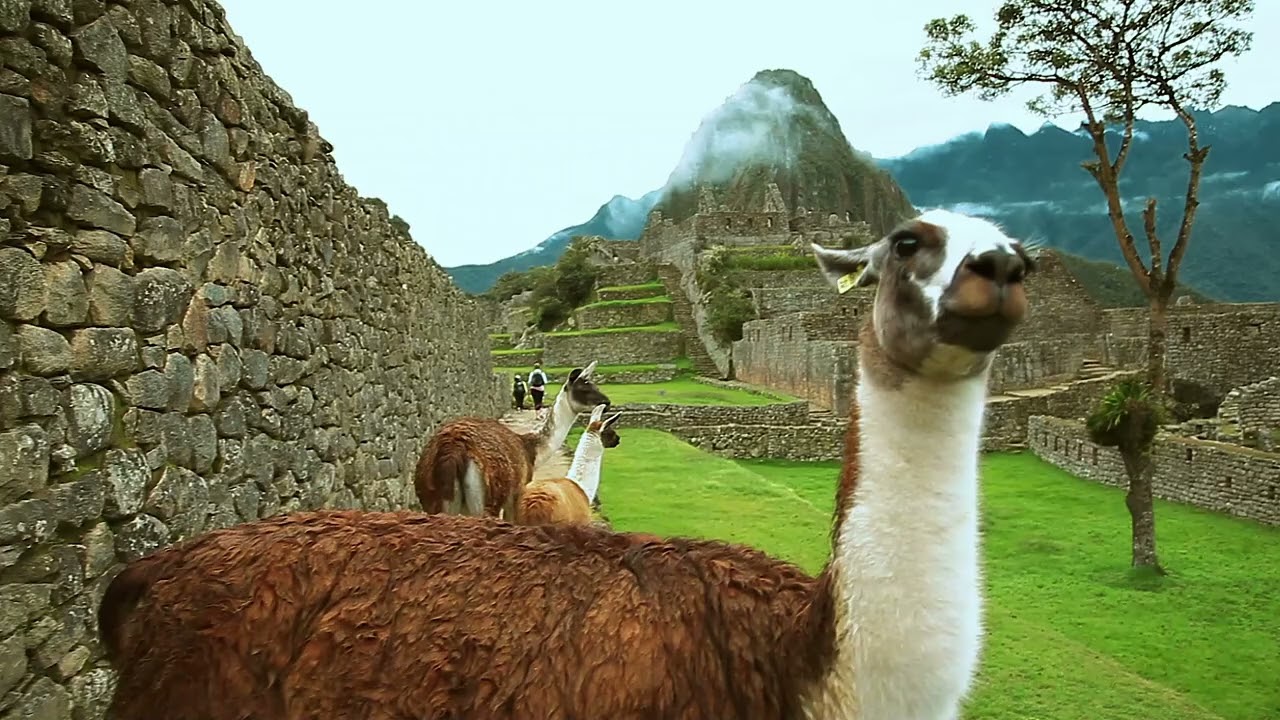
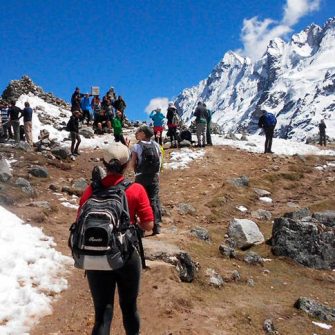
Early, around 03:00 hours, we will pick you up from the hotel in Cusco to make the trip to Qollasuyo, southern part of the ancient Quechua (Cusco), which was an important part of the Tawantinsuyo (4 ancient regions of the Incas)-from the beginning We will travel for 4 hours in transport, first pass through the village of Checacupe, then continue through Pitumarka, finally reach Quesiuno, place where we start the hike, in this place we stop place where we will start the hike, in this place we stop for breakfast and after a short talk, we will begin our hike at the foot of the Nevado de Ausangate, a rise of approximately 3 hours to the highest point of Cerro Colorado, during this Route we will have the opportunity to see the different varieties of South American Camelids, arrived at Cerro Colorado, we will have time to take pictures of this enigmatic place. Afterwards, we will continue with our hike of 3 hours of descent and flat parts to the starting point of the Walk (Quechuyno), where we have the lunch, finally return to Cusco, where we will arrive at 20:00 hours approx.
Included / Not Included
What to wear
- Trekking Shoes
- Small backpack 20 L or 30
- Rain Poncho
- T-shirts dry Fit
- 1 hiking pants
- Warm jacket
- Coca leaves
- Cap, hat and gloves
- Sunscreen, toilet paper
- Sunglasses,
- Water bottle
- Personal medications (headache, anti-inflammatory drugs)
- Extra money (preferably in soles)
- Finally we return to the city of Cusco where the end is in these points the Av: Tullumayo, Qoricancha or PLAZA San Francisco.
Recommended
Itinerary
The First day of going route Cusco – Hydroelectrics
The departure will be 07:30 a.m. from the office or boarding point where it will be the start of the tour and we are enrumbad to OLLANTAYTAMBO enjoying the beautiful landscapes of the Cordillera de los Andes. Where we will make a short stop of approximately 30 min. From where we will continue the journey through a winding ascent to Malaga, located at a height of approx. 4316 meters m from where we can observe one of the extraordinary landscapes of the geography of Cusco.
After a short stop we will start the descent into the jungle passing through the different altitudinal floors that adopt paradisiacal landscapes of splendid snowed to the heated eyebrow of the jungle. Up to the height of Alfamayó we will find a path in perfect completely asphalted conditions. Place from where the dirt road begins, (without asphalt) where we will continue towards the town of Santa Maria. Located at a height of approx. 1575 meters m, to continue after a short stop at the village of Santa Teresa. 2:00 p.m. aprox. Where we will be expecting a pleasant lunch Andino with a variation of food for the delight of the customer, 3:00 p.m. Finally we will return your way to the train station in hydroelectric plant to Aguas Calientes reaching hours 5:00 to 5:30 p.m. where we placed in the respective hostel or hotel assigned to your choice, meanwhile you have free time where you can visit the hot springs in Aguas Calientes,
Second Day.- Visit to Machupicchu
You will have the option of being able to raise to Machupicchu by bus or on foot (according to your choice), breakfast will be served from 5:00 a.m. at its center of overnight, the tour started at 6 a.m. in the citadel of Machu Picchu and will have a duration approx. 2 hours, then you will enjoy free time to enjoy the majesty of MACHU PICCHU during the time you see it as convenient to visit it and also in the afternoon you can visit the town of Aguas Calientes and visit the hot springs called the same name and overnight at your selected hostel to be able to rest.
Third day.-Return to Cusco
You can have breakfast at your selected hostel and then until 10:30 a.m. approximately, time recommended and agreed to be able to board the train or you can walk from return to hydroelectric the same as part of Aguas Calientes 1:30 P. m and on foot from 11.30 am. Where we will transfer in our tourist mobility starting from hydroelectric 2.30 pm and continue the return to Cusco by the same route that we come, arriving in Cusco at 8:30 p.m. approximately.
Includes - No Included
What includes the service?
- Tourism Transportation going and return. (Cusco, hydro, Cusco)
- 2 Night Hostel or Hotel (private bathroom, hot water 24 hours, luggage deposit without additional cost and breakfast)
- 1 Lunch (first day), 1 dinner (first day), 1 breakfast (second day).
- Entrance to the citadel of Machu Picchu (first shift – upon availability)
- Professional guide English or Spanish
- Bus up and down.
What does the service not include?
- Breakfast of the first day
- Hydroelectric train – Aguas Calientes or viceversa.
- Drinks or extra food.
- The last lunch of the second day.
- Entrance to the thermal baths.
Recommended
What do we recommend you take for your trip?
- Have their respective documents
- Mosquito repellent
- Sunscreen
- Cap and poles long sleeve Preference
- Swimsuit, shorts, towel, sandals if you want to visit the thermal baths (optional)
- Flashlight If you want to go up Walking to Machu Picchu
- Poncho for rain
- Personal water bottle and snack
- Camera, etc.
Itinerary
Tour Summary:
- Starting point: Cusco at the passenger Hotel
- FINAL point: Cusco at the passenger hotel
- DURATION: 2 days 1 night
- TRIP STYLE: Guided TOUR
- Activities: Archeological, cultural, ecological, hike.
- Departures: Daily
- TOTAL, walking distance: 12 km/7.5 miles
- Maximum height: 2700 meter/8858 feet
- Accommodation: 1 night hostel in Aguas calientes
- Food: 1 breakfast, 1 lunch, 1 dinner
What TIME AND SEDISFRUTA?
- Walk to Wiñaywayna by Inca Trails originals
- INCA TRAIL 2 days and 1 Night
- Enjoy the beautiful views of the valleys of the river Vilcanota
- Enter to Machupicchu through the Puerta del Sol
- Ends your tour in the sacred city of Machu Picchu
- Spend the whole day in Machupicchu
- Be one of the first to Machupicchu and enjoy sunrise
Day 1: Cusco – KM 104 – Machu Picchu – Aguas Calientes
- Pick Up: 5:00 to 5:30 from the hotel
- Transport in Cart: 1.5 hours from Cusco to Ollantaytambo for the train at 7:45 am
- Start OF THE TREK: 9:30 am in KM 104
After 1:30 hours by train, is low in the Km 104 where begins the Inca Trail and then walk for 3 hours until Wiñaywayna inca site where you will have a guided visit and also enjoy lunch, then walk 2 more hours to Intipunku “puerta del sol ” From here you have a beautiful view of Machupicchu. After dazzle us with the wonder of the Machu Picchu we began to descend toward Machu Picchu to photograph then take the bus to Aguas Calientes town to have a dinner and spend a nicht at the hostel
DAY 2: MACHU PICCHU – CUSCO
- Awake: 4:30 am for breakfast
- Arrival time to MACHU PICCHU: 6:00 am to see without many people and sunrise
- Guided in MACHUPICCHU: from 6:30 am to 8:30 am after free time.
- Return to Cusco: Take the train at 18:20 to Ollanta and then by car to Cusco
What do you see and enjoy?
- Spend the whole day in Machu Picchu
- Enjoy the beauty of the Inca cathedral see it without people and enjoy the Sunrise
- 2 hours guided tour in Machu Picchu
- Walk towards the Inca bridge
Additional Options
Huayna Picchu mountain: You must book in advance, only 400 people gain per day.
Machu Picchu mountain: At least book before you start the walk only 800 people gain per day
Machu Picchu the cathedral Inca. If you want to see without people it is best to arrive early in the morning if you are lucky with the weather you can enjoy the sunrise at Machu Picchu. After the guided tour in Machupicchu you have free time to explore on your own and if you book the additional tickets for the mountains you can climb the mountain Huaynapicchu or Machupicchu Mountain. There are also free options such as the Puerta del sol and Inca Bridge.
Includes - No Included
What IS INCLUDED?:
- Transfer from Cusco to the train station of Ollantaytambo
- A professional guide prepared in first aid and knowledgeable of the route.
- Second guide for groups of more than 09 passengers.
- Train ticket from Ollantaytambo to km 104.
- Box Lunch, passengers carry their lunch on Day 1.
- Entrance ticket to Machupicchu for the first and second day
- 01 night of hostel in Aguas Calientes
- Bus tickets, Machupicchu-Aguas Calientes-Machupicchu (03 bus tickets)
- First Aid Kit
- Bottle of oxygen
- 1 Lunch
- 1 Dinner
- 1 breakfast
- Train back Machu Picchu – Ollantaytambo
- Transfer from the station Ollantaytambo – Cusco to the hotel
Not included:
- Breakfasts on the first day
- Lunch on the second day.
- Gratuities
Recommended
We recommend to carry:
- Passport
- Poncho of Rain (plastic).
- A coat
- Sunscreen.
- Cap or hat.
- Sunglasses.
- walking shoes.
- Water bottle.
- camera.
- Personal medications suggested by your personal physician.
Itinerary
(*) Optional: One day prior to the start date of the tour, we will visit you at your hotel at 7:00 pm, to give you all the necessary instructions for the tour to the Humantay Lagoon and to indicate the entire travel itinerary with the respective recommendations.
Level of difficulty: Easy
On the day of the tour, we will pick you up from your hotels at the agreed time the day before, between 4:30 am and 5:00 am, to board the mini van and drive to the village of Mollepata in the exuberant valley of the Apurimac River, Where we will taste our Andean breakfast and we will buy what is necessary to realize the route before beginning the walk to the Humantay Lagoon located to 4200 msnm approx.
After breakfast, we continue towards Challacancha enjoying during the journey of all the magestuosidad of the snowy Humantay in the mountain range of Vilcabamba and we continue the route to Soraypampa, place where we will have a small rest.
Charges of energy to continue our trip to the starting point of the Soraypampa trek, we begin our trek with breathtaking views of the Humantay Lagoon and amazing viewpoints appreciating all the scenic beauty.
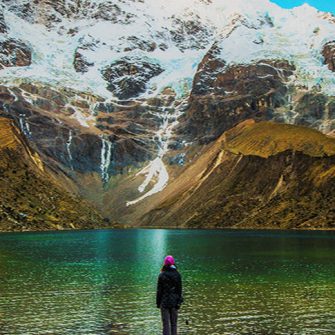
From Soraypampa to the Humantay Lagoon are approx 3 km, which can be done between 1 hour and 30 minutes to 2 hours of hiking approximately. On the one hand we can see the Humantay at 4200 m.s.n.m and on the other side the Imposing Snowy Salkantay.
Then we will return to our mobility to head to our lunch in Mollepata and free time to take photos, rest and finally to return to the city of Cusco.
Included / Not Included
What is included for this day?
- Professional Guide
- Tourist transport
- 1 Andean breakfast
- 1 Andean mountain
- Join Humantay
- First aid
- Coca leaves
What is not included on this day?
- Water bottles
- Extra power
- Souvenirs
- Arrieros
- Support horses
Recommended
We recommend you keep in mind for this day
- Bring an extra drink for the road
- Jacket or windbreak
- Trekking shoes
- Hats
- unscreen
- Drugs against altitude sickness
- Cameras or camcorders
- One additional pole
Itinerary
Day 1: Cusco – SORAYPAMPA 15 km approx
4.30 am departure from CUSCO, passing through the towns of Izcuchaca and Limatambo arriving at Mollepata (2900. S.N. m) where we will be approximately at 7:30 AM where we will have our breakfast, then we will be Kick off our tour.
First we will take a truck to take us to the point of Markok´asa (50 min) (3380m. S.N. m) from that point start our hike) in an approximate 5 hours Passing by the towns of Markok’asa and groove Inka and thus coming to Soraypampa (3900m.s.n.m) where we will be arriving at 1.30 pm there we will take our first lunch and first camp after lunch we will go to visit the beautiful lagoon of Humantay (4200m.s.n.m) 1:30hras.hours up where we have breathtaking views of the mountain and at night we will have our dinner to then be able to rest.
Day 2: SORAYPAMPA – CHAULLAY 21km approx.
Being 7:00am We will be ready to taste a nutritious breakfast and then continue with our hike, we start from the point of Soraypamapa to the highest point open Salkantay (5 to 6 hours) (/. S.N. m) passing by Salkantaypampa and Soyrococha where We will appreciate a small lagoon then start the descent to Huayracmachay (4 h) (3800 s.n. m) where we’ll take our lunch then continue down to Chaullay (3 h) (2900 s.n. m) where our second camp.
Day 3: CHAULLAY – PLAYA SAHUAYACO – SANTA TERESA 11km approx.
Continuing our walk after a comforting breakfast we start our hike appreciating a variety of coca crops, considered the sacred leaf of our ancestors which is currently grown in tropical areas, this last stretch will be on the descent to Beach (5hrs.) (1900m.s.n.m) where we will taste our lunch and there direction to Santa Teresa in a bus where we will spend the night. Optional visit the Termas de Cocalmayo.
Day 4: SANTA TERESA – AGUAS calientes 17 km approx
The sunrise will be inside a tropical zone full of history and nature there our breakfast awaits us ready to taste the reach this town will take us an approximate time of 6 hours, passing by the Met Do Hydro-electric Rest Center in this Puno we will take a box lunch (hydroelectric train service – Aguas calientes: Optional), Making stops in different places to appreciate simply the scenery and its environment full of waterfalls with impressive falls which come from the glaciers, arriving in the afternoon to the village mentioned that popularly is known as “Aguas Calientes”, (2000 m S.N.) there we will spend the night in a hostel at the foot of the Inca citadel of Machupicchu. We will take our last Supper in a restaurant and our guide will organize everything for the next day
Day 5: Machupicchu-CUSCO
in the morning around 4.30 am we ascend to the majestic Inca city of Machupicchu where we will visit accompanied by our guide an approximate 2 hrs., and the rest of the day off in which you can visit Optional (not included in the package) Huayna Picchu, Inti Punku, or Machu Picchu Mountain once again all the citadel, we return in the afternoon to the village of Machu Picchu Town depending on the timetable of our train of return which we will make known once you book your trip with our company.
Included / Not Included
Includes:
- Transportation from Cusco to Mollepata. Touris bus
- Professional guide.
- Additional guide from 14 Paxs
- Chef with experience in
- Routes
- Kitchen Assistant from 10 paxs
- foods (4b, 4 L, 4 D).
- Horses (equipment, food, and 5 kilos of luggage of the client
(includes sleeping and Matras), if in the case exceeds this weight it is the responsibility of the endorsing agency and/or passenger) only for 3 days. - Camping equipment (tents and flasks)
- Entrance to Machupicchu.
- 01 Night of Hostal Aguas Calientes
- Return Ticket by tourist train Aguas Calientes – Ollantaytambo time 21:30 pm or 18:35 depends on spaces
- Transport Ollantaytambo-Cusco. Tourist BUS. End in Plaza San Francisco
Not included:
- Breakfast on the first day. S/. 10.00
- Lunch of the last day.
- Boiled water during the TOUR
- Transporte Santa Teresa – Hydroelectrica (neither for paxs, nor for backpacks)
- Admission to Huaynapicchu
- CONCETUR bus service in Machupicchu.
- Sleeping bag.
- Inflatable
- Hydroelectric train
- Service and extra costs.
Recommended
We recommend to bring:
- Backpack.
- Clothes that warm at night
- Rain clothes.
- Flashlight
- Cap.
- Several poles.
- Insect repellent.
- Plastic Poncho for rain
- purifying tablets.
- Medication equipment.
- Water bottle.
- Original Passport.
- Student Card (ISIC) If this is the case.
- Extra money on Suns & dollars
- Walking sticks.
Itinerary
1.- The sacred valley of the Incas:
In the 15th century, two Inca sovereigns, Pachacuti Yupanqui and Tupac Yupanqui, created an immense empire in South America, which ran from southern Colombia to central Chile and occupied much of the Andean territories of Peru, Bolivia and North of Argentina. The empire of the Four Regions of the Sun, or Tahuantinsuyo, stretched over more than 4,000 kilometers from north to south and was articulated by an impressive road network, 40,000 kilometers long. The neuralgic center of that powerful state was located in the heart of the Peruvian sierra: in a wide area at more than 3,000 meters altitude where the city of Cusco, capital of the Empire and court of the Incas, rose. This area was crossed by the denominated Sacred Valley, a territory that extends along the river Vilcanota-Urubamba, of extraordinary agricultural wealth and marked by a series of splendid Inca fortresses.
The Vilcanota was a sacred river for the Incas, who saw in this course of water the terrestrial counterpart of the Milky Way. The river is born in the glaciers of the mountain range of Vilcanota and changes its name to the one of Urubamba in its descent towards the thicket of the Amazon rainforests in the Andean region. In its route unites two of the most sacred mountains for that pre-Columbian civilization: the snow-covered one of Ausangate and the snowed one of the Salcantay. Its waters are nourished by snow from the snowmelt of the Veronica or Wacay Wilca, a female mountain considered the “wife” of the Salcantay. Just at the edge of a slope that descends from the Salcantay, on a promontory surrounded by the waters of the Urubamba River, the Incas built the extraordinary ceremonial citadel of Machu Picchu, royal residence of the first emperors and sacred center for worship of the surrounding mountains .
2.- Artisanal market of Pisac:
Located 30 km from the city of Cusco, the main square of Pisac is home to this market, a colorful and lively place, where the most famous handicrafts from Cusco are displayed, among handicrafts, textiles, ponchos, bags, etc. , And ceramic handicrafts, which are reproductions of Inca archaeological pieces, such as keros (ceremonial vessels), necklaces, etc. Indigenous merchants and craftsmen from many villages, dressed in their traditional costumes, attend this fair.
3.-Archaeological center of Pisac
The most extensive of the fortresses of the Sacred Valley and of all the Inca civilization is that of Pisac.
Nestled on an abrupt rocky promontory, the roads leading to it defy precipices and traverse tunnels dug into the rock. The heart of the settlement includes a temple dedicated to the Sun or Intihuatana, which includes some of the most exquisite examples of Inca stone architecture. The sector called Kalla Q’asa also has a chain of ritual baths.
The heights of Pisac visually dominate the rocky cliffs across the throat of Quitamayo, whose caves were used for funeral purposes. In times of the Incas it was frequent that the bodies of the deceased were placed in caves or machays, which were called mallquihuasis or “houses of mummified ancestors”. Unfortunately, most of the burials in the necropolis of Pisac were plundered by treasure hunters before archaeologists could study them. From a military point of view, this fortified enclave at the foot of the eastern Andes controlled the access to Paucartambo and to the leafy jungles of the Peruvian Amazon. However, in spite of its strategic location, no evidence is known that attributed to Pisac a prominent role during the Inca resistance to the Spanish occupation. An imposing set of cultivated fields descend down the steep slopes of the mountain, towards the colonial town of Pisac, now famous for its picturesque Sunday market. In the background stands the figure of the Pachatusan, a sacred mountain to which the Incas revered as “support of the world”.
4.- Archaeological center of Ollantaytambo:
Legend has it that Ollantay (the Titan of the Andes) of plebeian origin, loved the princess Cusi Coyllor (the joyful star) daughter of King Inca Pachacútec, who disagreed with this love.
Pachacútec sent the princess to a house of Virgin, Ollántay tried to kidnap her from there, without succeeding and managed to flee. From the fortress that Ollántay had in command he rebelled against Pachacútec, and after bloody battles he was defeated, but the generosity of Pachacútec made him to forgive the life of Ollántay.
The foundation of Ollantaytambo is attributed to Ollántay, and prevails the military fortress that protected this zone of the valley, strategically located between two mountains. Nowadays this fortress can be seen, as well as the rich Inca archaeological sites, made up of the Inti temple (sun god), the baths of the Ñustas (princesses), the chullpas of Cachiccata, a group of terraces symmetrically staggered and very steep in The slope of a hill.
At the summit of the archaeological complex there are six monoliths of enormous size, assembled with incredible precision, which have engraved mysterious motifs of Inca iconography.
The present town of Ollantaytambo, has many houses built on the bases of the old Inca town, where they inhabit natives of rooted ancestral customs.
The complexity and beauty of Inca buildings and the contemporary people, the vast agricultural complex, great administrative and social center, religious and military, is considered by many scientists and historians as one of the most important living museums in the world.
Ollantaytambo is located 97 km (60 miles) from Cusco, 2,846 m.s.n.m. (9,337 feet). Train station to Machu Picchu.
5.- Machu Picchu
The citadel of Machu Picchu is the most important tourist attraction of Cusco. Now known as one of the “Seven Wonders of the World” or “Navel of the World”, it is currently considered a World Heritage Site by UNESCO and is the most visited destination in Peru for having extraordinary architectural and landscape samples, preserving a peculiar Flora and fauna.
Machu Picchu is located in the Department of Cusco, on an area of approximately 32,592 hectares. Place where it would have been one of the residences of rest of Pachacutec that was the First Inca of the Tahuantinsuyo nevertheless it shows its better constructions and the evident ceremonial character that would demonstrate that this one was used like a Religious Sanctuary.
Included / Not Included
What is included for this day?
- Pick up from hotel
- 1 lunch buffet in Urubamba
- Hotel – hostel in Aguas Calientes
- Transfers from Cusco to the Ollantaytambo station by private car or tourist transport and from the station to Cusco.
- Train tickets round trip Ollantaytambo – Aguas Calientes – Ollantaytambo. (Only tourist train does not include local train)
- Transfer service by bus to go up and down from “Aguas Calientes” to Machu Picchu and Machu Picchu to “Aguas Calientes”.
- Entrance tickets to the archaeological group of Machu Picchu.
- Guided service with professional, Lic. In Tourism, during the service in Spanish or English
- Reservations of tickets, spaces and services of Agency.
- Permanent assistance provided by our Company
What is not included on this day?
- Air Flights.
- Breakfast.
- Water or drinks.
- Tips.
- Tourist tickets (BTG or BTP)
- Souvenirs
- Extra food or drinks
Recommended
We recommend you keep in mind for this day
- Bring an extra drink for the road
- Jacket or windbreak
- Sunscreen
- Shady
- Sunglasses
- Selfye toothpick
- Wear sneakers or light shoes or tennis shoes.
- Drink lots of fluids on your trips.
- Waterproof (long poncho) in rainy season.
- Long sleeve shirts.
- Long pants.
- Insect repellent.
- Sunscreen, wide-brimmed hat for sunny days.
- Medicine and / or articles of personal use.
- One backpack or lightweight briefcase per person.
- Camera or camcorder.
- Have checks and coins handy in small denominations dollars, euros or soles.
- Have Tourist Tickets (BTG or BTP)
Itinerary
Day 1: Cusco – Open Malaga – SAN LUIS-SANTA MARIA.
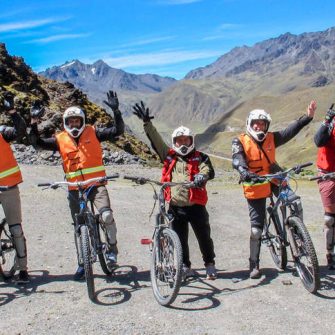
We pick you up between 6:30 a.m. and 7.30 am of your lodging and then leave on a bus to the ABRA MALAGA (four hours-4350 M.A.S.L.) A high point of the route where we can observe an excellent view of the Nevado VERÓNICA, then follow the route to the village of S An LUIS (2900 M.A.S.L.), where we will have a time for lunch, then descend on bicycles for a period of 02 to 03 hours, on the route we can see banana plantations, orange groves, coca and other fruit trees, we will also pass through rustic Andean villages; At 5 or 6 pm we reach the town of Santa Maria.
Then take a transport to Santa Teresa, where we will have a dinner and then spend the night in a family hostel.
Day 2: SANTA TERESA – Aguas Calientes.
After breakfast we will continue our hike to reach the village of Machu Picchu, the walk will be of 5 to 6 hours, we will pass by some waterfalls, where we will have the option of taking a refreshing bath we will then arrive to hydroelectric, where we will have lunch and then to continue our way until we reach the town of Machu Picchu (Aguas Calientes), here will have the afternoon free for relaxing; in the evening we will receive the dinner and we rest already thinking of the tour the next day “Machu Picchu”, overnight stay in a hostel.
Day 3: MACHU PICCHU – CUSCO.
We got up very early (4:30 a.m.) to start climbing up to the archaeological center, walk lasts one hour and ten minutes we arrive early to see the output of the sun (this depends on the weather), after taking the first photos we start the guided tour that lasts between two to two and a half hours, after have free time (4 to 5 hours) in order to be able to ascend to the mountain WAYNAPICCHU (additional cost), or just rest and take more photos, in the afternoon we descend again towards Aguas Calientes where they will have free time for lunch on behalf of the PAXS, then take our return train (02 hours) that will bring us up Ollantaytambo, there we will be waiting to bring us on a bus (01 hour and a half) to Cusco.
Included / Not Included
Includes:
- Pick up from hotel.
- Tourist Bus to open Malaga.
- Equipment for downhill cycling (bikes with front suspension, body, helmets and gloves).
- 01noches of accommodation in family houses and 01 night in Hostal.
- Food (02 breakfasts, 02 lunches and 02 dinners)
- Admission to Machu Picchu.
- Professional guide en route and in Machu Picchu.
- Guide Assistant (more than 10 passengers).
- Train back from Aguas Calientes to Ollantaytambo.
- Return transport from Ollantaytambo to Cusco.
It does not include:
- Bus to go up and down from Aguas Calientes to Machu Picchu. (They go up and down walking).
- First breakfast and last lunch.
- Entry to Waynapicchu.
- Entrance to the thermal waters of Cocalmayo (S/10.00 direct payment).
Recommended
What to wear:
- Standard backpack.
- Jacket.
- comfortable clothes.
- Shorts, poles, comfortable shoes.
- Hat or cap.
- Sunscreen.
- Mosquito repellent.
- Rain Poncho.
- extra money.
Itinerary
ITINERARY:
The pick up of the passengers will be done at each respective hotel, the pick-up will be at 7:00 am and then we will go to the adventure park, we will take the Cusco-Lima highway, this tour will take us approximately 1 hour, until the Limatambo zone ( Pampa Conga), there will be provided all the necessary equipment to start.
Canyoning: they will be equipped with (wit suit) neoprene suits, jackets or windbreaks, gloves, helmets, harnesses, all the equipment will be provided for the descent of 04 waterfalls approximately, the first being 20 meters, the second waterfall of 30 meters, the third of 10 meters and the last waterfall of 60 meters.
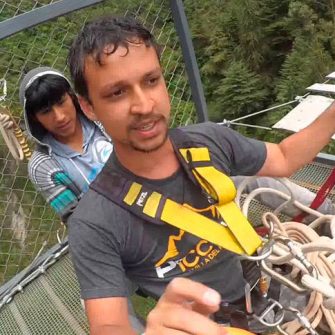
Hanging bridge: used to reach the jump cabin, this consists of 200 steps, and with a distance of 80 meters long and 110 meters high.
Swing rope (Tarzan): we will finish with a pendulum jump of 90 meters of rolling at a height of 110 meters.
After this moving adventure, which will last between 3 to 5 hours all this depending on the number of passengers and their disposition, culminate with a lunch snack, then return to the city of Cusco our arrival will be approximately between 4 to 6 pm.
Inclued / Not Included
It includes:
- Transport
- Trained guides
- Helmets
- Guards
- Houses
- Rappel equipment
- lunch
- wet suit (suits of neopelo, ropes, harnesses, etc.)
Recommended
Recommendations:
- muda of extra clothes
- Sport shoes or sandals with strap.
- extra money (buy photos or whatever you like)
Itinerary
1.- The sacred valley of the Incas:
In the 15th century, two Inca sovereigns, Pachacuti Yupanqui and Tupac Yupanqui, created an immense empire in South America, which ran from southern Colombia to central Chile and occupied much of the Andean territories of Peru, Bolivia and North of Argentina. The empire of the Four Regions of the Sun, or Tahuantinsuyo, stretched over more than 4,000 kilometers from north to south and was articulated by an impressive road network, 40,000 kilometers long. The neuralgic center of that powerful state was located in the heart of the Peruvian sierra: in a wide area at more than 3,000 meters altitude where the city of Cusco, capital of the Empire and court of the Incas, rose. This area was crossed by the denominated Sacred Valley, a territory that extends along the river Vilcanota-Urubamba, of extraordinary agricultural wealth and marked by a series of splendid Inca fortresses.
The Vilcanota was a sacred river for the Incas, who saw in this course of water the terrestrial counterpart of the Milky Way. The river is born in the glaciers of the mountain range of Vilcanota and changes its name to the one of Urubamba in its descent towards the thicket of the Amazon rainforests in the Andean region. In its route unites two of the most sacred mountains for that pre-Columbian civilization: the snow-covered one of Ausangate and the snowed one of the Salcantay. Its waters are nourished by snow from the snowmelt of the Veronica or Wacay Wilca, a female mountain considered the “wife” of the Salcantay. Just at the edge of a slope that descends from the Salcantay, on a promontory surrounded by the waters of the Urubamba River, the Incas built the extraordinary ceremonial citadel of Machu Picchu, royal residence of the first emperors and sacred center for worship of the surrounding mountains .
2.- Artisanal market of Pisac:
Located 30 km from the city of Cusco, the main square of Pisac is home to this market, a colorful and lively place, where the most famous handicrafts from Cusco are displayed, among handicrafts, textiles, ponchos, bags, etc. , And ceramic handicrafts, which are reproductions of Inca archaeological pieces, such as keros (ceremonial vessels), necklaces, etc. Indigenous merchants and craftsmen from many villages, dressed in their traditional costumes, attend this fair.
3.-Archaeological center of Pisac
The most extensive of the fortresses of the Sacred Valley and of all the Inca civilization is that of Pisac.
Nestled on an abrupt rocky promontory, the roads leading to it defy precipices and traverse tunnels dug into the rock. The heart of the settlement includes a temple dedicated to the Sun or Intihuatana, which includes some of the most exquisite examples of Inca stone architecture. The sector called Kalla Q’asa also has a chain of ritual baths.
The heights of Pisac visually dominate the rocky cliffs across the throat of Quitamayo, whose caves were used for funeral purposes. In times of the Incas it was frequent that the bodies of the deceased were placed in caves or machays, which were called mallquihuasis or “houses of mummified ancestors”. Unfortunately, most of the burials in the necropolis of Pisac were plundered by treasure hunters before archaeologists could study them. From a military point of view, this fortified enclave at the foot of the eastern Andes controlled the access to Paucartambo and to the leafy jungles of the Peruvian Amazon. However, in spite of its strategic location, no evidence is known that attributed to Pisac a prominent role during the Inca resistance to the Spanish occupation. An imposing set of cultivated fields descend down the steep slopes of the mountain, towards the colonial town of Pisac, now famous for its picturesque Sunday market. In the background stands the figure of the Pachatusan, a sacred mountain to which the Incas revered as “support of the world”.
4.- Archaeological center of Ollantaytambo:
Legend has it that Ollantay (the Titan of the Andes) of plebeian origin, loved the princess Cusi Coyllor (the joyful star) daughter of King Inca Pachacútec, who disagreed with this love.
Pachacútec sent the princess to a house of Virgin, Ollántay tried to kidnap her from there, without succeeding and managed to flee. From the fortress that Ollántay had in command he rebelled against Pachacútec, and after bloody battles he was defeated, but the generosity of Pachacútec made him to forgive the life of Ollántay.
The foundation of Ollantaytambo is attributed to Ollántay, and prevails the military fortress that protected this zone of the valley, strategically located between two mountains. Nowadays this fortress can be seen, as well as the rich Inca archaeological sites, made up of the Inti temple (sun god), the baths of the Ñustas (princesses), the chullpas of Cachiccata, a group of terraces symmetrically staggered and very steep in The slope of a hill.
At the summit of the archaeological complex there are six monoliths of enormous size, assembled with incredible precision, which have engraved mysterious motifs of Inca iconography.
The present town of Ollantaytambo, has many houses built on the bases of the old Inca town, where they inhabit natives of rooted ancestral customs.
The complexity and beauty of Inca buildings and the contemporary people, the vast agricultural complex, great administrative and social center, religious and military, is considered by many scientists and historians as one of the most important living museums in the world.
Ollantaytambo is located 97 km (60 miles) from Cusco, 2,846 m.s.n.m. (9,337 feet). Train station to Machu Picchu.
5.- Archeological center of Chinchero:
On the way back to Cusco we will visit the picturesque village of Chinchero, where the remains of the royal hacienda of Tupac Inca Yupanqui are found. You will admire your well preserved Inca wall in the main square and visit the beautiful colonial temple with interesting frescoes on the porch, built on the bases of an Inca building.
Includes - No Included
What is included for this day?
- Professional Guide
- Tourist transport
- Lunch Buffet (Restaurant Tunupa)
- Entrance tickets (BTG or BTP)
What is not included on this day?
- Souvenirs
- Extra food or drinks
Recommended
We recommend you keep in mind for this day
- Bring an extra drink for the road
- Jacket or windbreak
- Sunscreen
- Shady
- Sunglasses
- Selfye toothpick
- Have the tourist tickets (BTG or BTP)
- Sneakers
- Hats
Itinerary
First turn:
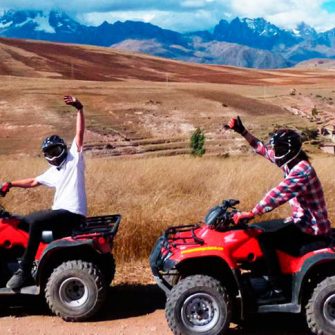
Start 7:00 a.m. From Cusco to the community of Cruzpata on the way (Cusco – Ollantaytambo) the tourist transport will take about 45 minutes to reach the ATV – Quad Bikes base.
Then you will have a training of about (10 -15) minutes to familiarize yourself with the ATVs. Then we start to drive the quad, only after about 10 minutes we will have our first stop to take wonderful photos, continuing our journey through the Andes mountain range, the route realizes ups and downs fantastic scenery and lots of fun, 45 Minutes of travel and all with direction to the archaeological center of Moray that is a very important place to visit.
In which we will interrupt and we will realize the guided visit that will be in charge of one of our professional guides Bilingual.
Continuing our tour we will pass through the typical village of Maras, characterized by its colonial period covers and as a final point of visit we will have the salt mines of Maras known as salineras and return to the base of ATV – Quad Bikes.
The tourist vehicle waits for us to continue our trip to Cusco, having as final point of arrival the city of Cusco.
Second shift:
Home 13:30 p.m. From Cusco to the community of Cruzpata on the way (Cusco – Ollantaytambo) the tourist transport will take about 45 minutes to reach the ATV – Quad Bikes base.
Then you will have a training of about (10 -15) minutes to familiarize yourself with the ATVs. Then we start to drive the quad, only after about 10 minutes we will have our first stop to take wonderful photos, continuing our journey through the Andes mountain range, the route realizes ups and downs fantastic scenery and lots of fun, 45 Minutes of travel and all with direction to the archaeological center of Moray that is a very important place to visit.
In which we will interrupt and we will realize the guided visit that will be in charge of one of our professional guides Bilingual.
Continuing our tour we will pass through the typical village of Maras, characterized by its colonial period covers and as a final point of visit we will have the salt mines of Maras known as salineras and return to the base of ATV – Quad Bikes.
The tourist vehicle waits for us to continue our trip to Cusco, having as final point of arrival the city of Cusco.
NOTE:
We do not offer any type of insurance, in addition the clients must respond in case of damage to the ATV, and sign a contract document of services and risks.
NOTE 1:
If the customer decides to leave the tour by their own decision, the amount paid will not be refunded by charging NO SHOW for 70% of the tour total paid.
Included / Not Included
What is included in the service?
- Tourist transportation Cusco – Cruzpata – Cusco.
- ATVs with fuel.
- Safety Equipment Helmets and gloves.
- Bilingual professional guide.
- Management classes for those who do not have experience.
- First aid kit.
- Safety vest with light reflection.
- Plastic of rain.
- Transportation Control Salineras to Salineras round trip
What is not included in the service?
- Entrance tickets (Moray and salineras).
- Power supply.
- Gratuities (optional).
Recommended
What we recommend for the tour:
- Wear warm clothing especially 2nd shift.
- Raincoats or rain ponchos.
- Sunglasses.
- Sunscreen.
- Extra money.
- Documents (Passports or DNI)
Itinerary
Itinerary
Located just 15 minutes from Cusco (Poroy)
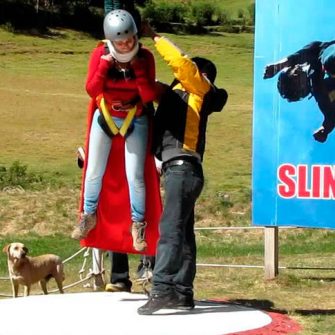
It is the higest in latin america 128 meters ejerced (opposite of the bungee jumping)
The user is secured to the ground with a special anchoring system, while the elastic rope is being stretched.
Once the elastic cord is stretched to the desired level, the timer is activated whisch frees the user who is thrown into the air.
Inclued / Not Included
Includes:
Recommended
Itinerary
Itinerary
Located just 15 minutes from Cusco (Poroy)
Our bungee jump is the hisghest in latin america. This activity takes takes place from a elevator that goes up to 122 meters
The jump is performed with a special elastic rope made for this type of activities, which is secured the user´s feet. In addition to the elastic rope, the user wears a body harness from which a safety cordon is attached to the elastic rope.
Inclued / Not Included
Includes:
Recommended
Bienvenido a WordPress. Esta es tu primera entrada. Edítala o bórrala, ¡y comienza a escribir!